
 01.
01.
Legacy App Modernization
We migrate apps off outdated languages, frameworks, and dependencies onto a modern, supported stack, so you’re not one OS update away from your app breaking entirely.


Stateside Digitals offers legacy app modernization services, rebuilding outdated apps with modern code, better performance, and a redesigned UI.
01.
We migrate apps off outdated languages, frameworks, and dependencies onto a modern, supported stack, so you’re not one OS update away from your app breaking entirely.
 02.
02.
If your app still works but looks and feels a decade old, we redesign the interface around how users actually expect apps to work today, without necessarily touching the backend underneath.
 03.
03.
We clean up and restructure existing code that’s become hard to maintain, so future updates take days instead of weeks, without changing what the app does from a user’s perspective.
04.
We move apps from outdated native code to modern frameworks, or from a struggling hybrid build to a proper native or cross-platform foundation, depending on what actually fits your app.
05.
Slow load times and laggy interactions push users away. We profile your app to find what’s actually causing the slowdown and fix the real bottleneck instead of guessing.
06.
We update outdated backend infrastructure and database structures to something that can actually scale, without losing the historical data your business depends on.
07.
Every change gets tested against your app’s existing functionality, so modernizing the app doesn’t quietly break a feature your users rely on every day.
08.
After the rebuild ships, we stay on to patch bugs, apply updates, and make sure the app you just modernized doesn’t drift back into needing another modernization in two years.
A UI refresh or a fix for a handful of specific problems, without touching the underlying architecture. These sit at the lower end.
A meaningful chunk of the codebase gets rebuilt or migrated, along with a design refresh. These cost more and take longer.
The app is effectively rebuilt on a new foundation, often alongside new features that weren’t feasible on the old stack. These sit at the top end, comparable to building a new app from scratch.
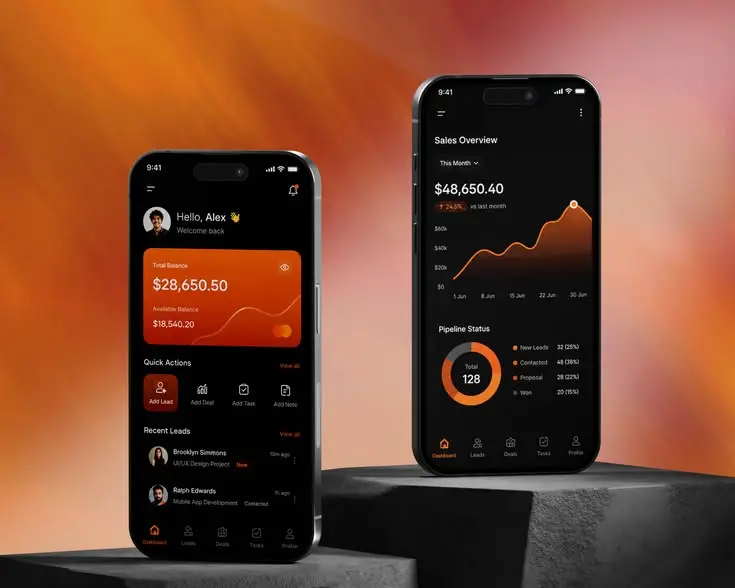
The core functionality still works and users generally like what the app does, but the code underneath is outdated, slow, or hard to maintain. Modernizing preserves what’s working while fixing what isn’t.
The app’s fundamental architecture can’t support what your business needs now, or the codebase is in bad enough shape that patching it costs more over time than starting clean.
We start with a full technical audit of your existing app, documenting what’s actually broken, what’s just old, and what’s still working fine as-is.
Our designers map out what changes, visually and structurally, based on what the audit found, not a redesign for its own sake.
Our developers migrate and rebuild the app in stages where possible, so you’re not stuck with a frozen product for months while a full rewrite happens behind the scenes.
We test every change against the app’s existing functionality, so the modernized version does everything the old one did, plus what it couldn’t.
A company that jumps straight to a rebuild quote without reviewing your current app is guessing, not scoping. A real legacy app modernization process starts with an honest audit.
Migrating an existing app with real users and real data is a different skill set than building something from a blank canvas. Ask about specific modernization projects, not just new app work.
A vague quote that “depends on what we find” without a real audit first is a red flag. Ask for an itemized estimate based on an actual look at your code.
Make sure your contract states clearly that you retain ownership of the source code, the app, and your user data throughout the migration, not just after final payment.
An app that just got modernized still needs upkeep. Ask what support looks like once the project wraps, so you’re not back here again in two years.
